

NCLEX mental health nursing is one of the most consistently tested content areas on the exam — and one of the most misunderstood by nursing students. Many test-takers underestimate psychiatric nursing during their preparation, focusing heavily on medical-surgical content and leaving mental health as an afterthought. That approach often backfires on exam day.
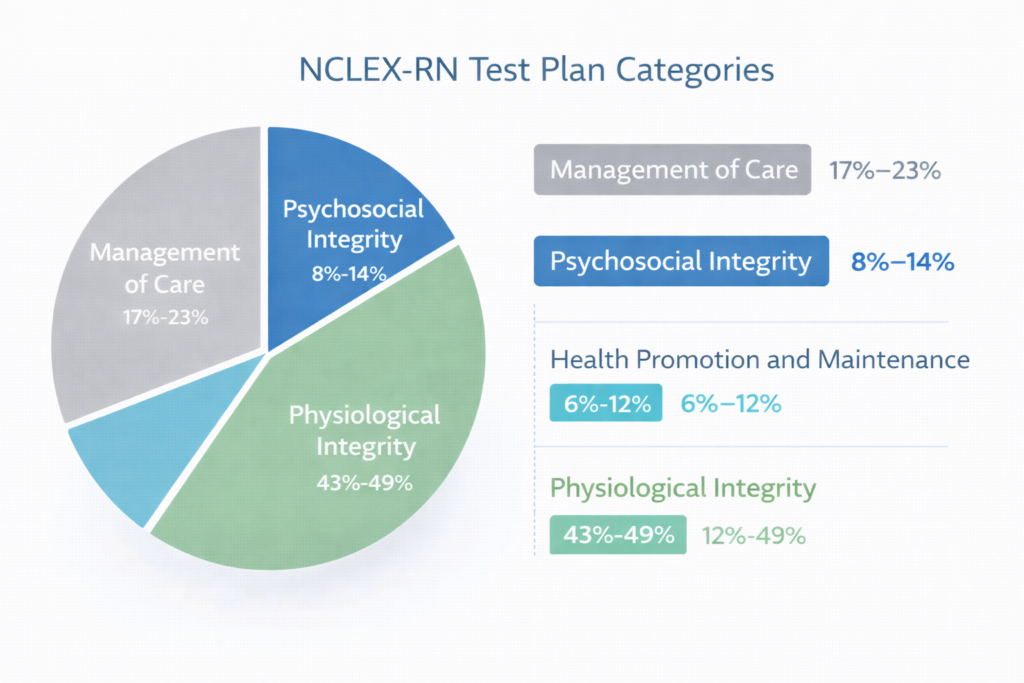
According to the NCSBN’s current test plan, psychosocial integrity — which includes mental health nursing, therapeutic communication, and psychiatric disorders — makes up approximately 6 to 12 percent of the NCLEX-RN. That is a substantial portion of the exam, and the questions in this category require a type of reasoning that feels different from the clinical calculations and physiological priorities you encounter in other sections.
This guide covers everything you need to know about NCLEX mental health nursing in 2026: the highest-yield psychiatric topics, how therapeutic communication is tested, the most commonly misunderstood concepts, and the strategies that will help you answer psych questions with confidence.
Why NCLEX Mental Health Nursing Feels Different from Other Content Areas
NCLEX mental health nursing questions test a different kind of clinical reasoning than most other content areas. In medical-surgical nursing, you are often identifying a physiological problem and selecting the intervention that addresses it most directly. In psychiatric nursing, the correct answer frequently depends on what you say to the patient, how you respond to a behavior, or how you prioritize a patient’s psychological safety alongside their physical needs.
This distinction trips up a lot of students because the wrong answer in a mental health question often sounds compassionate and logical on the surface. Two answer choices might both seem supportive, but one reflects genuine therapeutic communication and the other subtly redirects, dismisses, or creates a barrier between nurse and patient.
Another key difference is that NCLEX mental health nursing questions frequently test your understanding of patient rights, legal and ethical principles in psychiatric care, and the nurse’s role within a therapeutic milieu. These are areas that get less attention in nursing school clinical rotations, which is why deliberate study of the content is so important.
How Mental Health Questions Are Distributed on the NCLEX
The NCSBN test plan places mental health content under the psychosocial integrity category, which covers coping and adaptation, mental health concepts, chemical dependency, therapeutic communication, behavioral interventions, and crisis intervention. Questions from this category appear throughout the exam and are not grouped together in a single section, so you need to be prepared to shift into a mental health reasoning mode at any point during the test.
High-Yield NCLEX Mental Health Nursing Topics to Study in 2026
Not all psychiatric content is tested equally on the NCLEX. The following are the highest-yield topics that appear most consistently across NCLEX mental health nursing questions and should be the core of your preparation.
Schizophrenia and Psychotic Disorders
Questions on schizophrenia focus on recognizing positive symptoms such as hallucinations, delusions, disorganized speech, and bizarre behavior, as well as negative symptoms like flat affect, alogia, and avolition. You will also need to know how to respond therapeutically when a patient is experiencing hallucinations — particularly auditory hallucinations — and which antipsychotic medications are associated with which side effects. Extrapyramidal symptoms, tardive dyskinesia, and neuroleptic malignant syndrome are all high-yield pharmacology points within this topic.
Mood Disorders: Depression and Bipolar Disorder
For depression, the NCLEX tests your ability to recognize signs of major depressive disorder, assess suicide risk, understand antidepressant medication safety — including serotonin syndrome — and apply therapeutic communication with patients experiencing hopelessness or suicidal ideation. For bipolar disorder, focus on recognizing the difference between manic and depressive episodes, understanding lithium therapy including toxicity signs and therapeutic levels, and knowing the nursing priorities during an acute manic episode.
Anxiety Disorders and PTSD
NCLEX mental health nursing questions on anxiety disorders test your ability to differentiate levels of anxiety — mild, moderate, severe, and panic — and select the appropriate nursing intervention for each. Post-traumatic stress disorder questions focus on recognizing triggers, understanding the nurse’s role in creating a safe therapeutic environment, and knowing which communication approaches are most effective with trauma survivors.
Personality Disorders
Borderline personality disorder is the most commonly tested personality disorder on the NCLEX. Key nursing concepts include maintaining consistent boundaries, recognizing splitting behavior, avoiding power struggles, and responding therapeutically rather than reactively to manipulative or self-destructive behavior. Antisocial personality disorder and narcissistic personality disorder also appear, with questions focused on limit-setting and maintaining a safe therapeutic milieu.
Substance Use Disorders
Questions on chemical dependency cover the nursing assessment and management of alcohol withdrawal — including delirium tremens, seizure risk, and the use of benzodiazepines — as well as opioid withdrawal, which is less medically dangerous but requires careful symptom management. You should also know the principles of motivational interviewing, harm reduction, and the nurse’s non-judgmental role in supporting patients through recovery.
Suicide Risk Assessment and Crisis Intervention
Suicide-related questions are among the most commonly tested in NCLEX mental health nursing. You need to know the difference between suicidal ideation, intent, and plan, as well as the nursing priorities when a patient expresses suicidal thoughts. The NCLEX consistently tests whether you know to ask directly about suicide — including the means and the plan — and how to create a safe environment through means restriction and continuous observation.

Therapeutic Communication on the NCLEX: What It Really Means
Therapeutic communication is one of the most heavily tested skills in NCLEX mental health nursing, and it is also one of the areas where students lose the most points. The reason is that therapeutic communication on the NCLEX has a very specific definition — and it does not always match what feels natural or kind in everyday conversation.
What Therapeutic Communication Is
Therapeutic communication is a purposeful, goal-directed form of communication that focuses entirely on the patient’s needs, feelings, and experiences. It involves techniques that encourage patients to express themselves, feel heard, and explore their own thoughts without the nurse inserting personal opinions, advice, or judgments. The nurse’s role in a therapeutic interaction is to create a safe space for the patient to process their experience — not to fix, reassure, or redirect.
Techniques That Are Always Therapeutic
- Open-ended questions: Asking questions that cannot be answered with yes or no — such as ‘Tell me more about what you are experiencing’ — invites the patient to share more and keeps the focus on their perspective.
- Active listening and reflection: Restating or summarizing what the patient has said in your own words demonstrates that you are fully present and have understood their message.
- Silence: Allowing moments of silence gives the patient space to process emotions and formulate their thoughts without feeling rushed or pressured.
- Clarification: Asking the patient to explain or expand on something they said — such as ‘I want to make sure I understand what you mean’ — shows engagement without making assumptions.
- Focusing: Gently guiding the patient back to a specific topic when the conversation drifts, without dismissing what they have just shared.
Responses That Block Therapeutic Communication
On the NCLEX, certain responses are consistently identified as non-therapeutic because they shift the focus away from the patient, minimize their experience, or introduce the nurse’s perspective. False reassurance — telling a patient ‘everything will be fine’ — is one of the most commonly tested non-therapeutic responses. Giving unsolicited advice, changing the subject, using clichés, asking ‘why’ questions, and offering personal opinions are all communication blocks that will appear as incorrect answer choices.
NCLEX Mental Health Nursing: Legal and Ethical Concepts You Must Know
Legal and ethical principles in psychiatric nursing are tested regularly on the NCLEX and represent an area where many students feel underprepared. The following concepts appear most frequently.
Voluntary vs Involuntary Admission
A voluntary admission occurs when a patient consents to psychiatric hospitalization. These patients retain their rights, including the right to refuse treatment and the right to request discharge. An involuntary admission occurs when a patient is hospitalized against their will — typically because they present an imminent danger to themselves or others. The criteria and procedures for involuntary commitment vary by state, but the NCLEX focuses on the general principles: imminent danger is the threshold, and the patient’s rights must still be respected within the legal framework.
Patient Rights in Psychiatric Settings
Patients in psychiatric facilities retain the same fundamental rights as any other patient, including the right to the least restrictive environment, the right to informed consent, the right to refuse medication unless a court order overrides this, and the right to confidentiality. The NCLEX tests your understanding of when these rights can be legally limited and what the nurse’s obligations are when a patient’s rights conflict with safety.
Duty to Warn and Confidentiality
The Tarasoff ruling established the legal precedent that mental health providers have a duty to warn identifiable third parties when a patient makes a credible threat against them. This is one of the exceptions to confidentiality in psychiatric nursing and is frequently tested on the NCLEX. Other exceptions include mandatory reporting of abuse and situations where a patient is an imminent danger to themselves.
How to Answer NCLEX Mental Health Nursing Questions Correctly
Mental health questions on the NCLEX follow patterns that become recognizable with practice. Understanding these patterns will help you select the right answer even when multiple options seem plausible.
Always Prioritize the Therapeutic Response
When a question asks what the nurse should say or do in response to a patient’s statement, always look for the option that keeps the focus on the patient’s feelings and experience. The correct answer will never dismiss the patient, offer a quick fix, or change the subject. If one option opens a therapeutic dialogue and another offers reassurance or advice, the therapeutic dialogue is almost always correct.
Safety Comes Before Therapy
When a patient presents with an immediate safety concern — suicidal ideation with a plan, aggressive behavior, or signs of acute psychosis — safety interventions come before any therapeutic communication technique. The NCLEX will always prioritize physical and psychological safety as the first nursing action in a crisis situation.
Know Your Medications Cold
NCLEX mental health nursing questions include a significant pharmacology component. Lithium toxicity, serotonin syndrome, extrapyramidal side effects, anticholinergic effects, and the dietary restrictions associated with MAOIs are all high-frequency testing points. For each class of psychiatric medication, know the therapeutic use, the key side effects, and the most important nursing teaching points.
Trust the Stem Over Your Instincts
Mental health questions often present answer choices that feel emotionally right but are clinically incorrect. A response like ‘I understand how you feel’ might seem warm, but it implies the nurse knows the patient’s experience without actually listening. Train yourself to evaluate answer choices against clinical principles rather than emotional intuition, and you will avoid one of the most common traps in this content area.
Study Tips for Mastering NCLEX Mental Health Nursing in 2026
Building confidence in NCLEX mental health nursing requires a targeted study approach. Here is how to make your preparation as effective as possible.
Start by reviewing the NCSBN test plan for the psychosocial integrity category. This document outlines exactly what content is within scope for the NCLEX and helps you prioritize your study time around the topics that are actually tested. It is available for free on the NCSBN website and should be the foundation of your mental health content review.
Practice NCLEX mental health nursing questions in dedicated blocks rather than mixing them randomly with other content areas. Spending focused time on psychiatric questions helps you shift into the right reasoning mode and recognize the patterns that distinguish therapeutic from non-therapeutic responses. After each practice session, review every question — including the ones you answered correctly — to understand why each option is right or wrong.
For pharmacology, create condition-specific medication summaries. For each major psychiatric disorder, list the first-line medications, their mechanism of action, the most important side effects, and the key nursing teaching points. Reviewing these summaries regularly builds the kind of solid pharmacology foundation that NCLEX mental health nursing questions consistently require.
Conclusion
NCLEX mental health nursing is a content area that rewards deliberate, focused preparation. It tests a different kind of reasoning than most of the exam — one that centers on communication, patient rights, psychological safety, and the nurse’s therapeutic role. Once you understand what the NCLEX is looking for in a mental health question, the patterns become clear and the answer choices become much easier to evaluate.
Focus your study time on the highest-yield psychiatric disorders, master the principles of therapeutic communication, know your psychiatric medications inside and out, and practice applying legal and ethical principles to clinical scenarios. With consistent preparation, NCLEX mental health nursing questions will shift from one of your weakest areas to one of your most reliable strengths on exam day.
